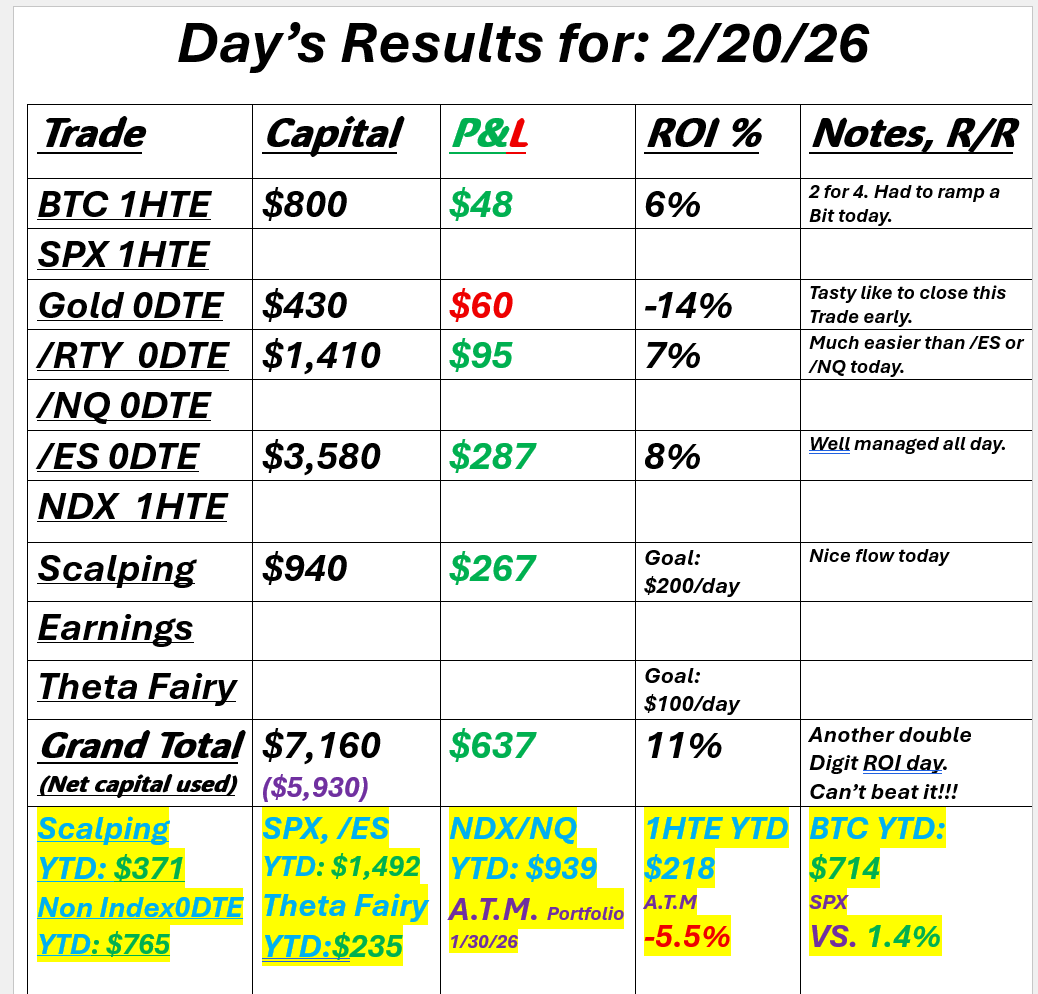
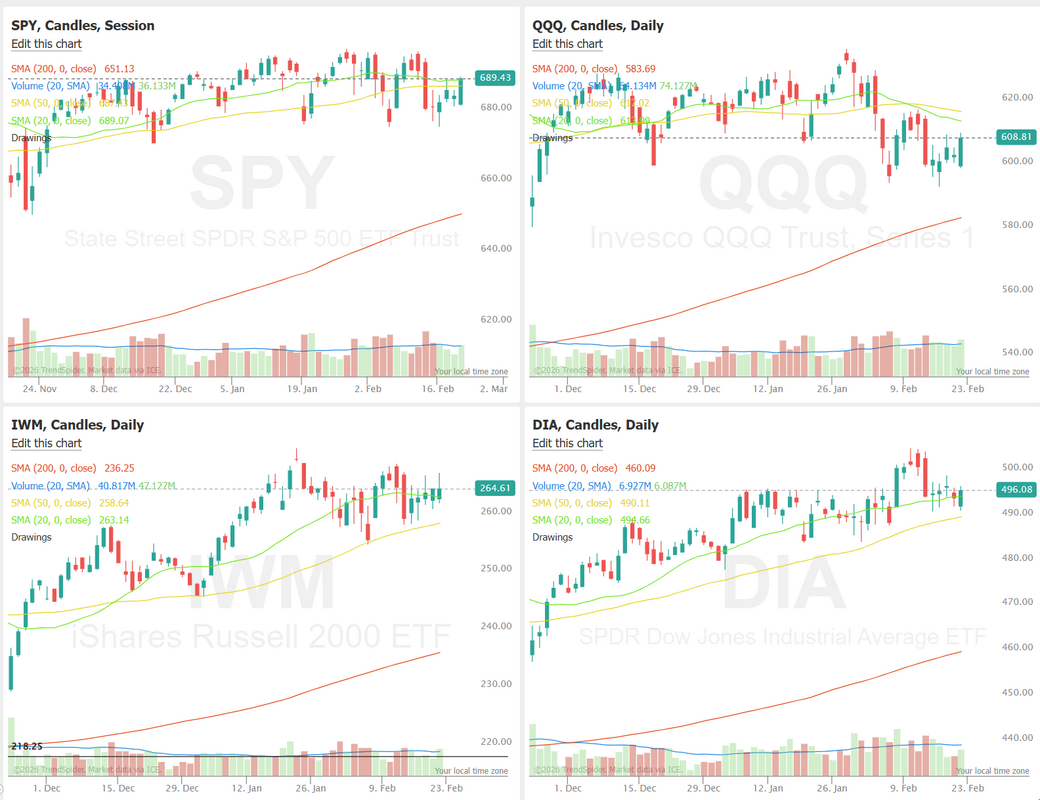
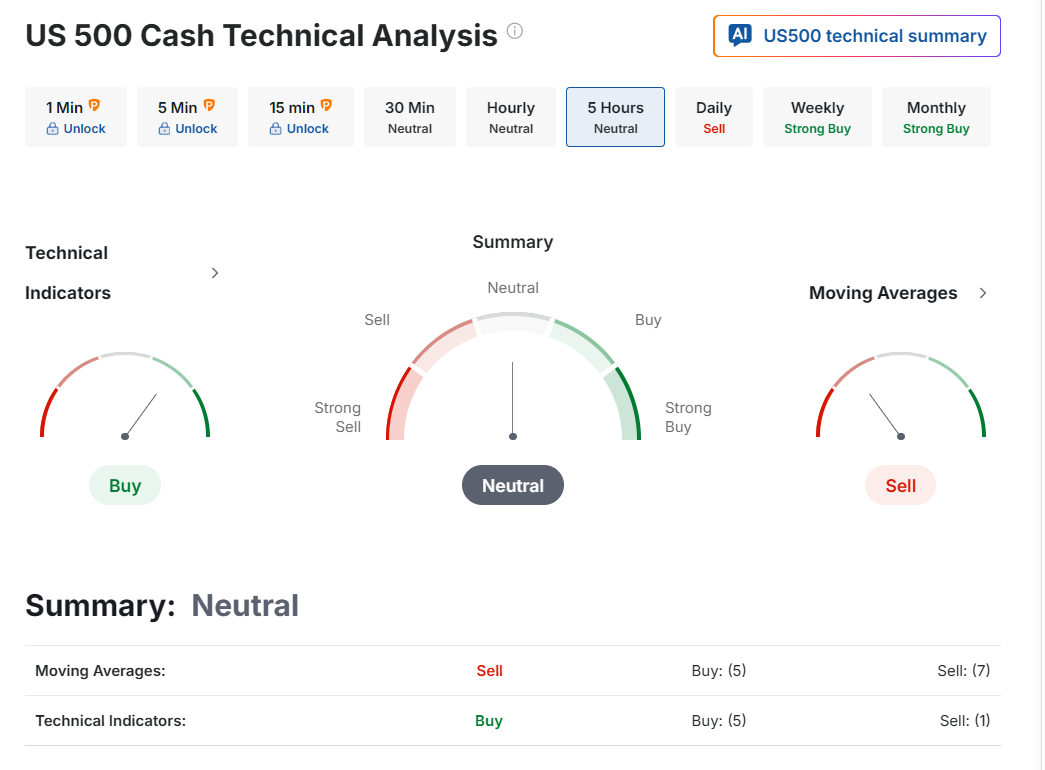
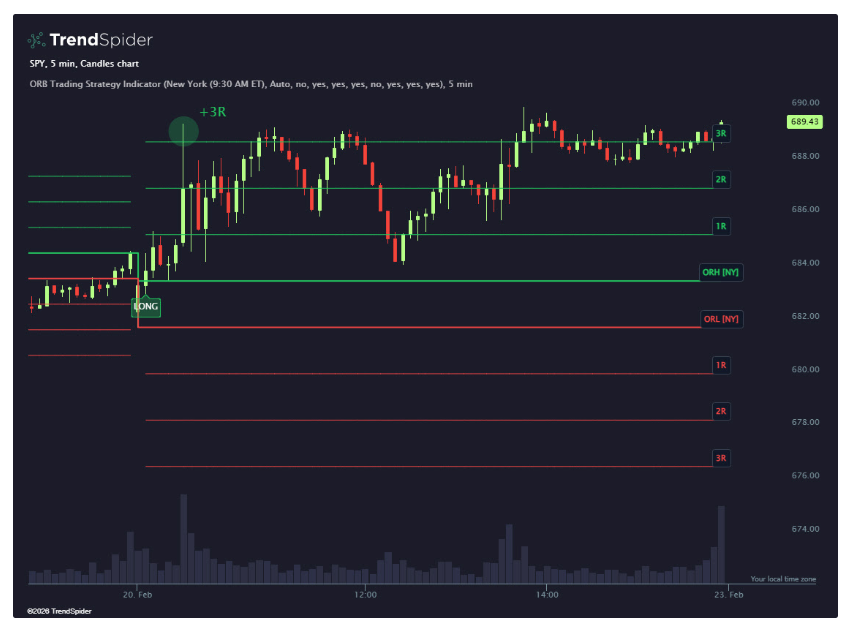
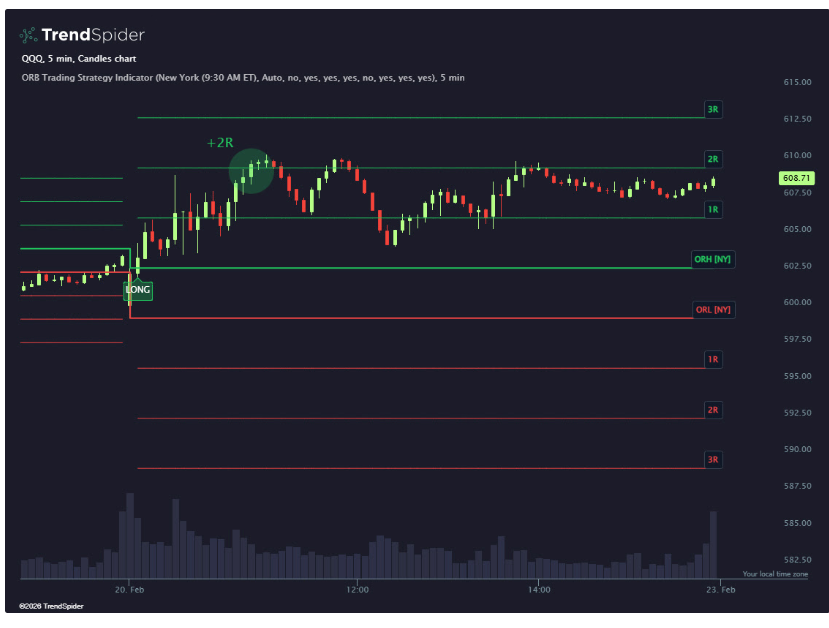
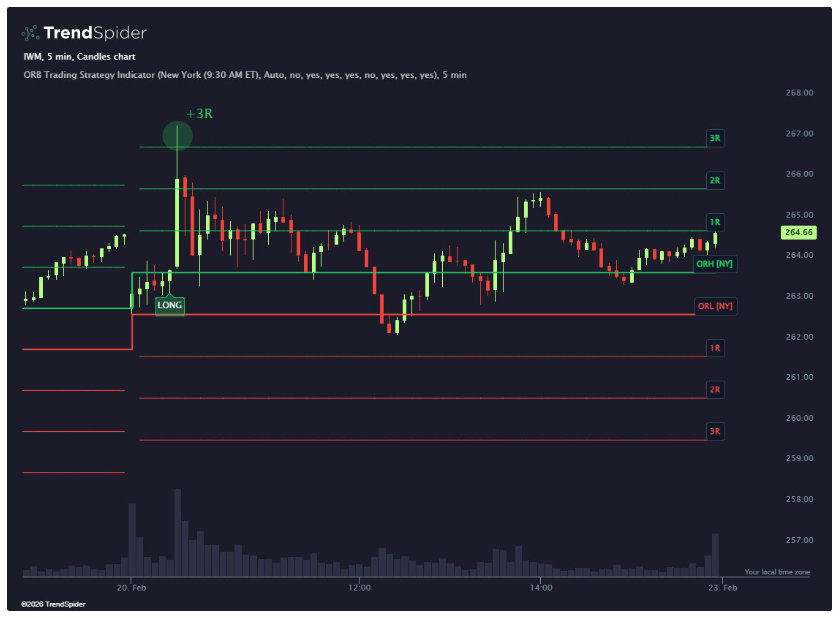
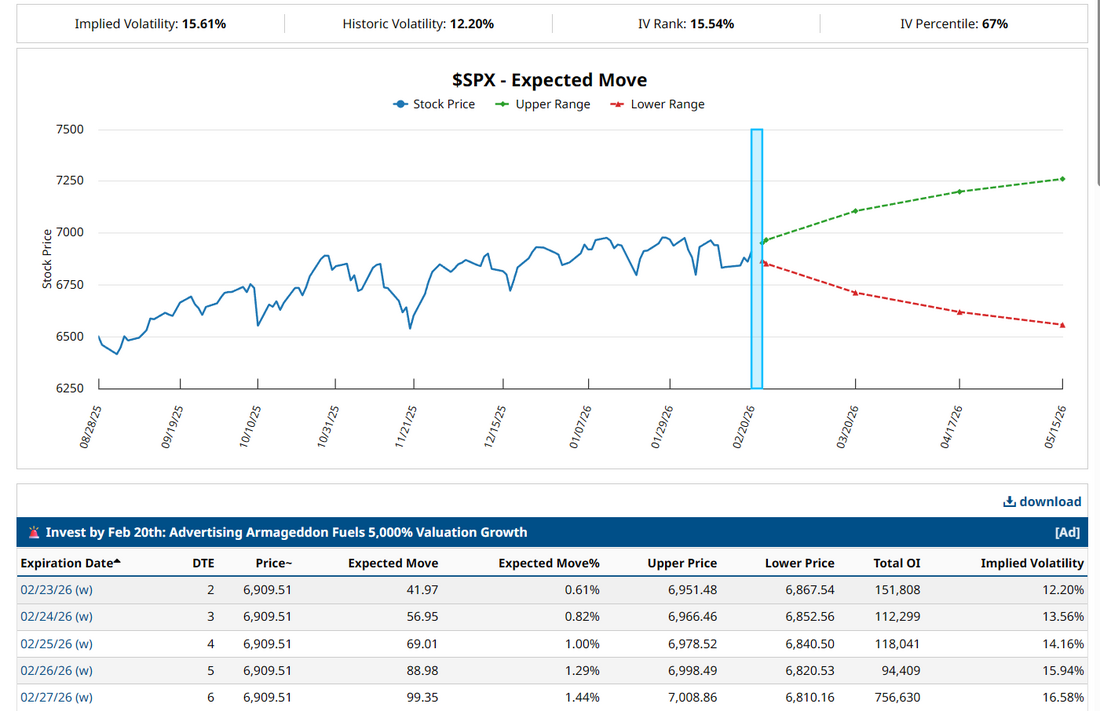
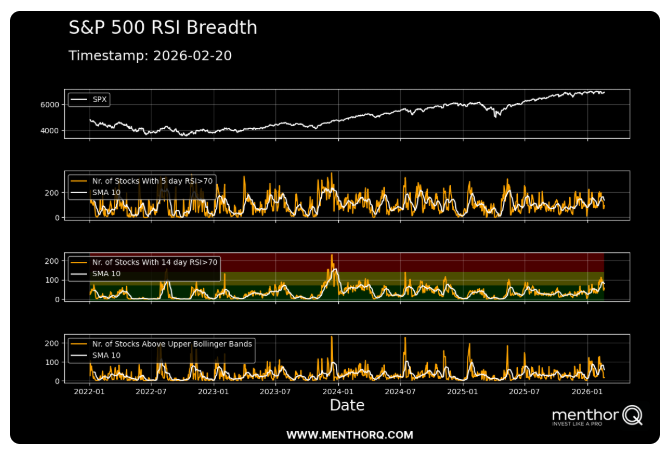
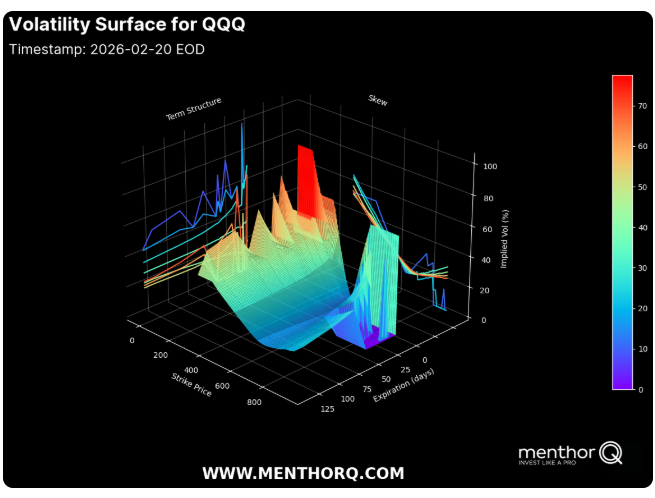
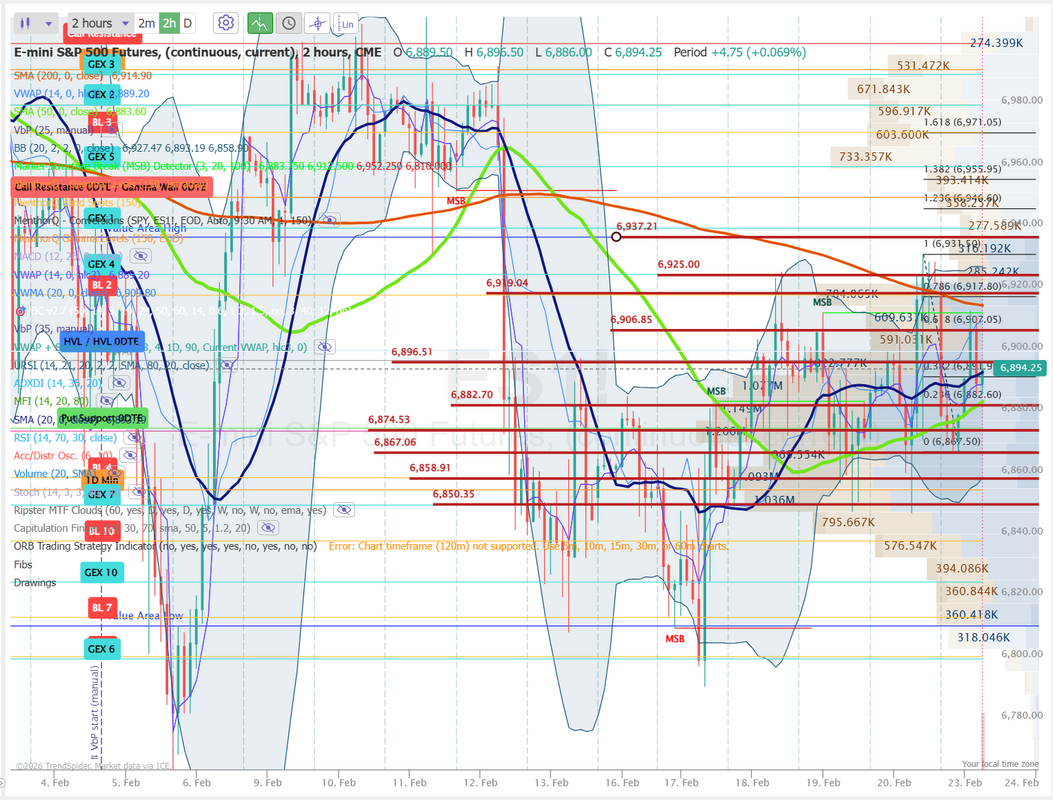
Geo politics rattling the cageWelcome back to a new trading week! Let's see..what's going on? Iran and the U.S. are close to a deal (or close to war). Mexico is at war with the cartel. Tariffs rescinded (oh, never mind, they are back on!) New York is now a communist state. Bottom line, it's a crazy, uncertain time, which is great for trading! We had a really solid trading day last Friday. Here's a look at our results. Let's take a look at the markets. All the indices held their ground on Friday. It could have really solidified a bearish trend had they not. We've got a straight neutral reading this morning on technicals. There's a lot of headline news to digest. March S&P 500 E-Mini futures (ESH26) are down -0.48%, and March Nasdaq 100 E-Mini futures (NQH26) are down -0.65% this morning, pointing to a lower open on Wall Street as heightened uncertainty about U.S. trade policy dampened sentiment. U.S. President Donald Trump on Saturday said he would raise global tariffs to 15% from 10%, a day after the Supreme Court struck down his “reciprocal” tariffs. “I, as President of the United States of America, will be, effective immediately, raising the 10% Worldwide Tariff on Countries, many of which have been “ripping” the U.S. off for decades, without retribution (until I came along!), to the fully allowed, and legally tested, 15% level,” Trump said in a Truth Social post. Notably, the 15% global tariffs are imposed under Section 122 of the 1974 Trade Act and are permitted to remain in effect for 150 days. Mr. Trump also cautioned that additional tariffs would follow. Uncertainty surrounding U.S. trade policy is adding another layer of complexity to markets already unsettled by concerns over AI disruption and U.S.-Iran tensions. Investor focus this week is on an earnings report from chip giant Nvidia, whose results have become a barometer for the AI trade, a fresh batch of U.S. economic data, and remarks from Federal Reserve officials. In Friday’s trading session, Wall Street’s major equity averages closed higher. Most members of the Magnificent Seven stocks advanced, with Alphabet (GOOGL) climbing over +4% to lead gainers in the Nasdaq 100 and Amazon.com (AMZN) rising more than +2% to lead gainers in the Dow. Also, chip stocks gained ground, with Lam Research (LRCX) rising over +3% and Analog Devices (ADI) advancing more than +2%. In addition, Corning (GLW) surged over +7% and was the top percentage gainer on the S&P 500 after UBS raised its price target on the stock to $160 from $125. On the bearish side, cybersecurity software stocks sank after Anthropic PBC rolled out a new security feature in its Claude AI model, with Cloudflare (NET) slumping more than -8%, and CrowdStrike Holdings (CRWD) sliding over -7% to lead losers in the Nasdaq 100. Data from the U.S. Department of Commerce released on Friday showed that the core PCE price index, a key inflation gauge monitored by the Fed, rose +0.4% m/m and +3.0% y/y in December, stronger than expectations of +0.3% m/m and +2.9% y/y. Also, the U.S. Bureau of Economic Analysis, in its initial estimate of Q4 GDP growth, said the economy grew at a +1.4% annualized rate, weaker than expectations of +2.8%. In addition, U.S. December personal spending rose +0.4% m/m, in line with expectations, and personal income grew +0.3% m/m, in line with expectations. Finally, the University of Michigan’s U.S. February consumer sentiment index was revised lower to 56.6, weaker than expectations of 56.9. Bret Kenwell, U.S. investment analyst at eToro, said the core PCE report underscores the uneven nature of the inflation battle. “It’s not the direction that investors or the Fed want to see,” he said, pointing out that core PCE has now increased for three straight months. Separately, Stephen Coltman, head of macro at 21Shares, described the combination of softer growth and firmer inflation as “unwelcome.” Atlanta Fed President Raphael Bostic said on Friday that it is prudent to keep rates “mildly restrictive” to bring inflation back to the 2% level and that current Fed policy is 25-50 basis points above neutral. Also, Dallas Fed President Lorie Logan said she was “cautiously optimistic” that the current monetary policy stance indicates “we’re on a path for inflation to come back down toward our target.” U.S. rate futures have priced in a 95.9% chance of no rate change and a 4.1% chance of a 25 basis point rate cut at the conclusion of the Fed’s March meeting. All eyes will be on Nvidia (NVDA) this week, as the semiconductor giant prepares to report its fourth-quarter and fiscal-year results on Wednesday. Investors anticipate that the company will beat Wall Street’s expectations and provide strong guidance for the current quarter. However, analysts said there may be little the company can do or say to meaningfully lift its shares amid growing skepticism about AI at the moment. Retailers such as Home Depot (HD), The TJX Companies (TJX), and Lowe’s (LOW), along with notable companies like Salesforce (CRM), Intuit (INTU), Dell Technologies (DELL), and CoreWeave (CRWV), are also set to release their quarterly results this week. Market watchers will also keep a close eye on several U.S. economic data releases this week amid uncertainty about the timing of the Fed’s next interest rate cut. The U.S. Producer Price Index for January will be the main highlight, providing further insight into the outlook for inflation. Other noteworthy data releases include the Conference Board’s Consumer Confidence Index, the S&P/CS HPI Composite - 20 n.s.a., the Richmond Fed Manufacturing Index, Initial Jobless Claims, Construction Spending, and the Chicago PMI. In addition, market participants will parse comments from a slew of Fed officials. Fed Governors Christopher Waller and Lisa Cook, along with Chicago Fed President Austan Goolsbee, Atlanta Fed President Raphael Bostic, Boston Fed President Susan Collins, Richmond Fed President Tom Barkin, Kansas City Fed President Jeff Schmid, and St. Louis Fed President Alberto Musalem, are scheduled to speak this week. Meanwhile, President Trump’s annual State of the Union address on Tuesday will also attract attention. Investors will monitor the address for signals on trade and other policy priorities ahead of this year’s midterm elections. “Tomorrow’s State of the Union will likely define how far Trump wants to go with the tariff rhetoric,” said Andrea Gabellone, head of global equities at KBC Securities. Today, investors will focus on U.S. Factory Orders data, which is set to be released in a couple of hours. Economists expect this figure to drop -0.4% m/m in December, following a +2.7% m/m jump in November. In the bond market, the yield on the benchmark 10-year U.S. Treasury note is at 4.077%, down -0.29%. Todays training is another good one. Today we'll focus on a trading approach that you can use for 0DTE trading that takes just a few minutes to set up and then you're done for the day! No monitoring. No sitting in front of the computer all day. No adjustments. It's called "sizing for zero". Be sure to tune in. It will be worth your time. SPY ended the week higher at 689.43 (+1.13%), finishing right where it opened the prior week. Despite the choppy price action, there was still opportunity for intraday traders using the new ORB tools. With tariff headlines hitting on Friday, 5-minute ORB traders were able to capture a 3R move as SPY rallied 5 points following the opening range breakout. The Nasdaq tracked closely with the S&P 500 last week, as QQQ closed at $608.81 (+1.15%) despite the heavy news flow. However, the 5-minute opening range breakout produced only a 2R move based on a stop beneath the opening range low. With NVDA earnings on deck, its reaction could drive QQQ decisively in either direction. Small caps lagged last week, with IWM closing at $264.61 (+0.63%). While the ETF has steadily outperformed large caps in 2026, momentum paused over the past week. Despite that consolidation, the 5-minute opening range breakout strategy delivered, allowing traders to capture a 3R move in less than 10 minutes. Expected move for the week on SPX is 1.48%. Decent enough and that should give us some premium to work with. SPX remains near recent highs, while short-term RSI breadth measures have moderated. The number of stocks with 5-day and 14-day RSI readings above 70 has declined from recent peaks, and the count of names trading above their upper Bollinger Bands has also eased. This configuration reflects elevated index levels alongside cooling short-term momentum participation. Breadth readings are no longer expanding and have shifted toward mid-range levels relative to recent extremes. At present, price stability coexists with a reduction in overbought breadth conditions, indicating a transition from expansionary momentum to a more balanced internal structure. QQQ’s ATM term structure shows a relatively stable and gently upward-sloping curve, with front-end implied volatility cooling compared to five days ago while longer-dated vols remain anchored near the low 20% area. This suggests near-term event premium has faded somewhat, but the market still prices steady medium-term uncertainty. On the smile, downside strikes remain bid with a pronounced put skew, while upside calls are comparatively flatter, indicating continued demand for protection over speculative upside. Overall, q-option positioning reflects a market that is less panicked than earlier in the week but still defensively tilted, with downside hedges carrying richer implied volatility than at-the-money or upside strikes. Let's take a look at the intraday levels we'll be working off for today's 0DTE entries. 6896 seems to be the "line in the sand" this morning. 6906, 6919, 6925, 6937 are resistance levels. 6885, 6874, 6867, 6858, 6850 are support levels. Let's have a strong start to the week! Scalping could be good today. I'll see you all in the live trading room shortly!
0 Comments
Your comment will be posted after it is approved.
Leave a Reply. |
Archives
January 2026
AuthorScott Stewart likes trading, motocross and spending time with his family. |