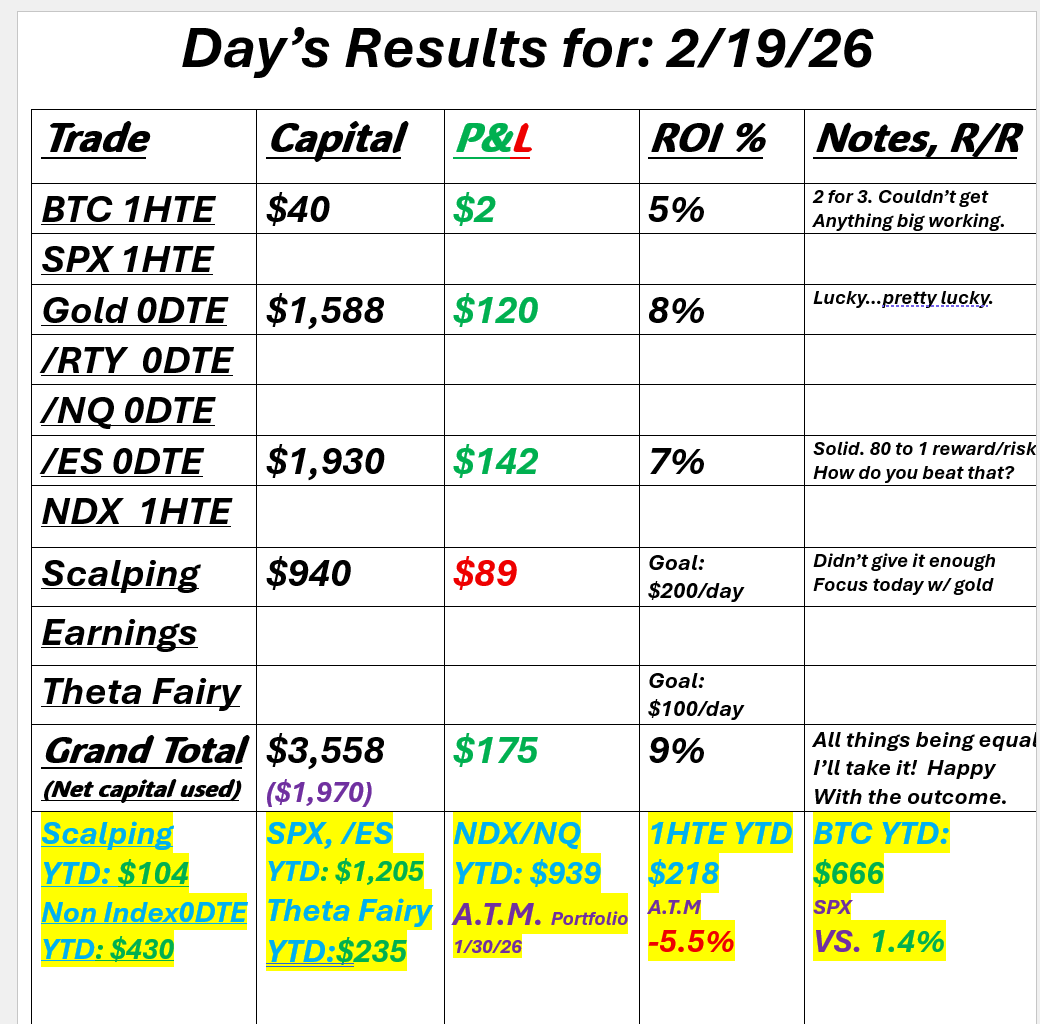
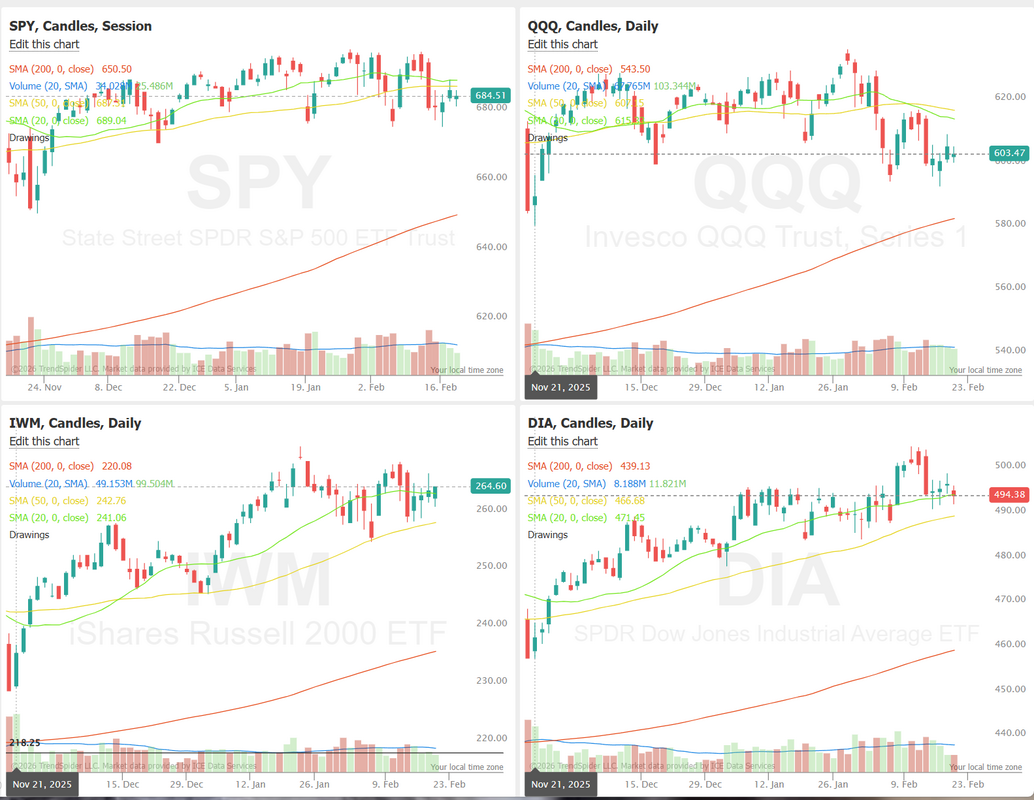
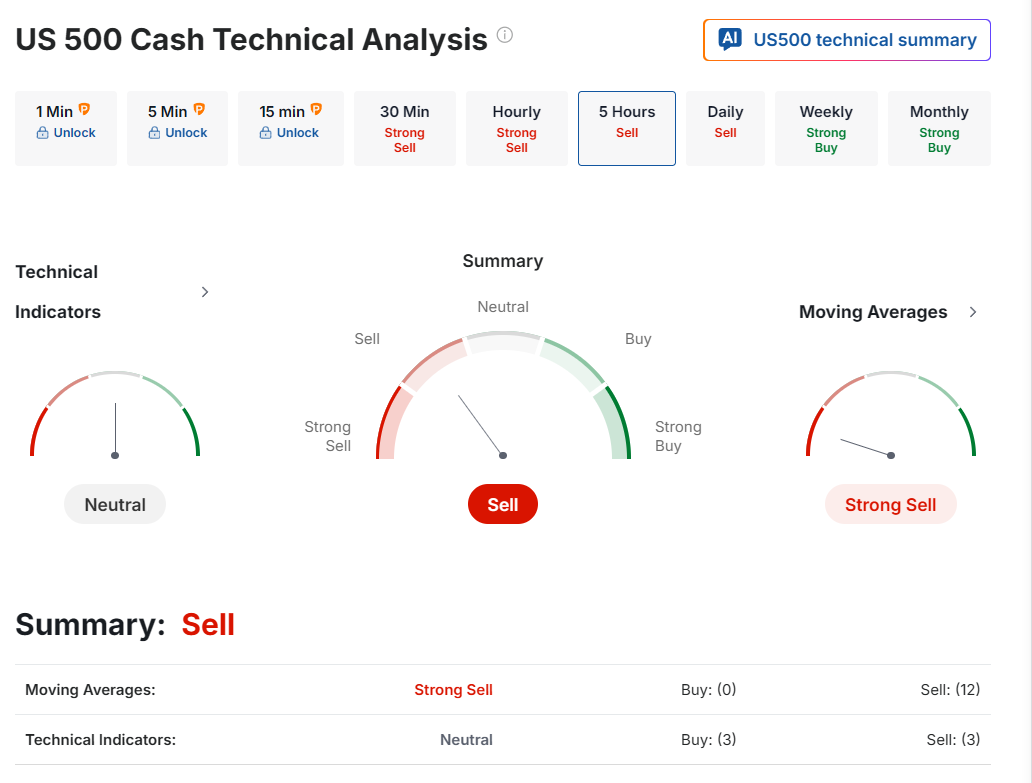
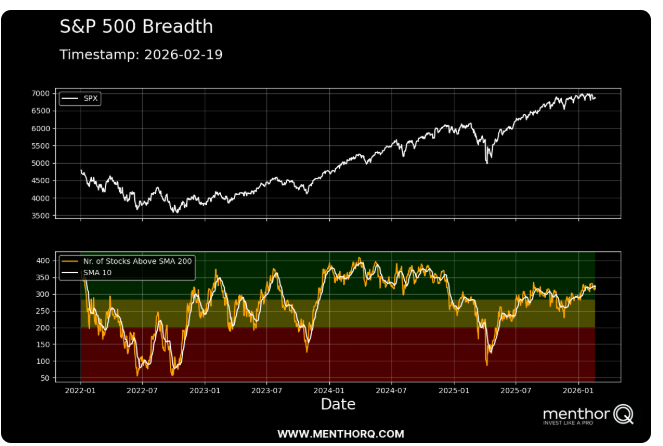
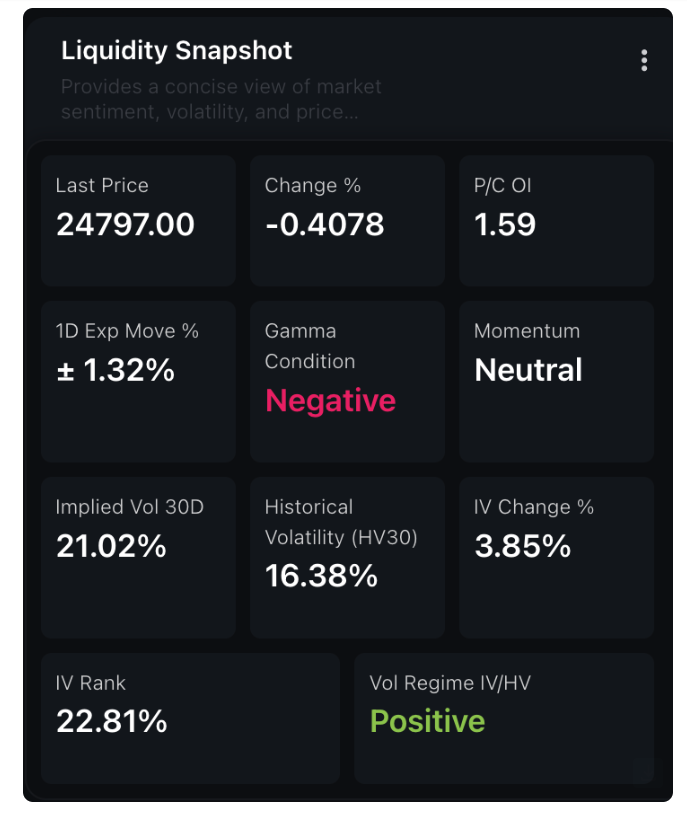
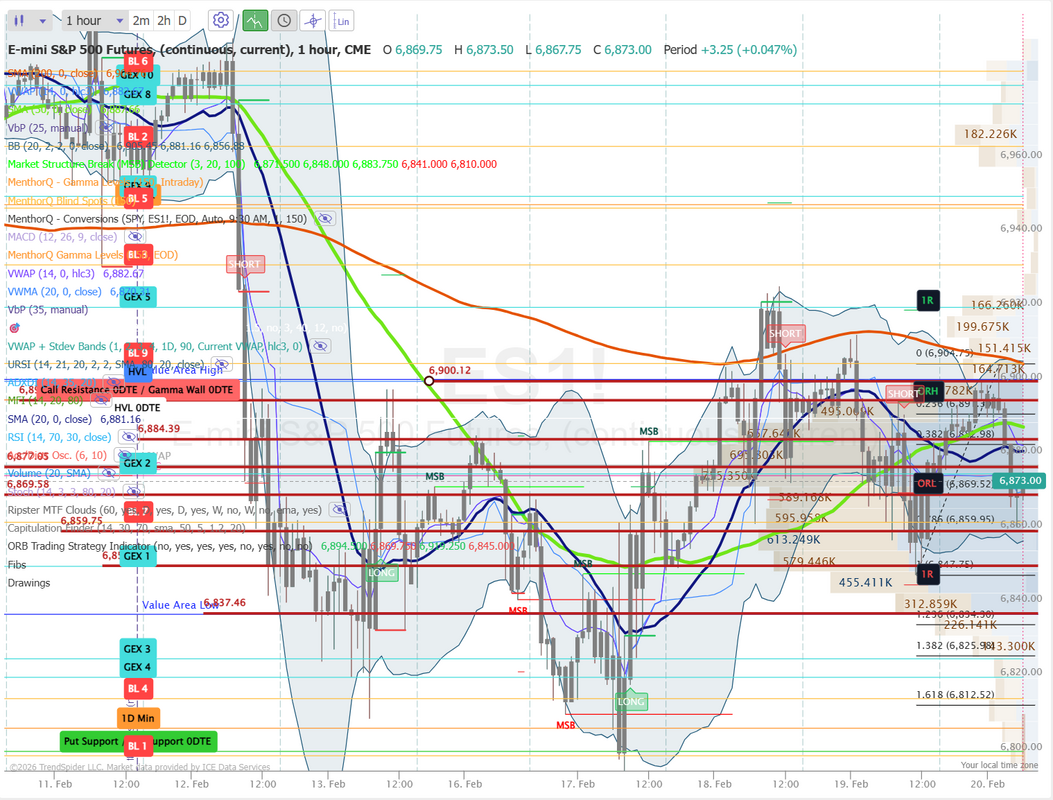
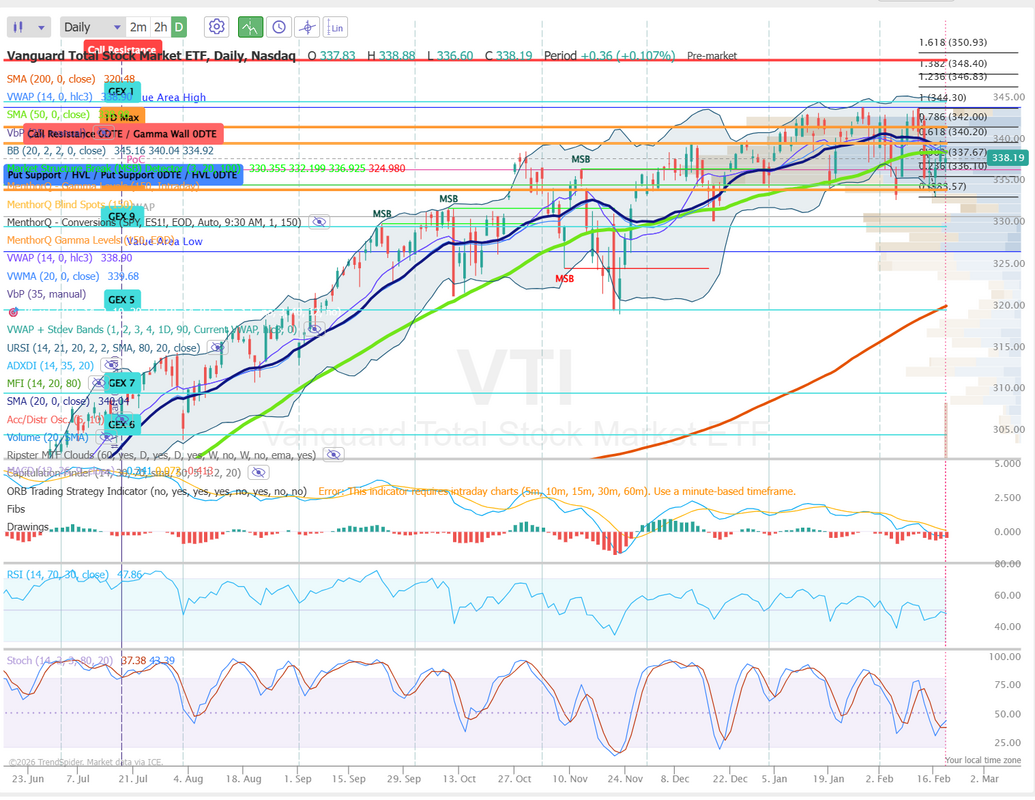
How often do you trade scared?I have to say, I probably have as many losing trades as the next guy but one thing I stand on is that I rarely if ever, trade scared. I've always been surprised at how many people do. BTW, we just finished up part three of an excellent training on systems and risk management yesterday. If you haven't watched the video and downloaded the power point I'd highly recommend it. Anyways...I was trading a bit scared yesterday morning. We had a rolled gold trade on and I was worried about Iran and the possibility of bombs dropping. In hindsight, even though we were able to pull a small profit, it wasn't a great setup. Control what you can and let the rest sort itself out. That trade took most of my focus and price action was "yucky" all day so we didn't get much working. Let's take a look at the markets. Did you gain any insight about future direction from yesterdays market? Yeah...me neither. We start today with a slightly bearish lean. March S&P 500 E-Mini futures (ESH26) are trending down -0.21% this morning as investors assess the potential impact of conflict in the Middle East and await a raft of U.S. economic data, with particular attention on the Fed’s favorite inflation gauge and the first estimate of fourth-quarter GDP. The U.S. military is deploying a wide range of forces in the Middle East, including two aircraft carriers, fighter jets, and refueling tankers. U.S. President Donald Trump said Iran had no more than 15 days to strike a deal over its nuclear program or “really bad things” would happen. The Wall Street Journal reported that President Trump is considering an initial limited strike on military or government sites in Iran to pressure it into meeting his demands for a nuclear deal. Market participants are also bracing for a potential Supreme Court ruling on President Trump’s sweeping tariffs. In yesterday’s trading session, Wall Street’s major indexes ended in the red. EPAM Systems (EPAM) tumbled over -17% and was the top percentage loser on the S&P 500 after the software design company issued soft FY26 revenue growth guidance. Also, chip stocks slid, with Microchip Technology (MCHP) and Texas Instruments (TXN) dropping more than -2%. In addition, Booking Holdings (BKNG) slumped more than -6% and was the top percentage loser on the Nasdaq 100 after the company posted weaker-than-expected Q4 EPS. On the bullish side, Omnicom Group (OMC) jumped over +15% and was the top percentage gainer on the S&P 500 after the marketing conglomerate reported better-than-expected Q4 revenue. The Labor Department’s report on Thursday showed that the number of Americans filing for initial jobless claims in the past week fell by -23K to 206K, compared with the 223K expected. Also, the U.S. Philly Fed manufacturing index rose to a 5-month high of 16.3 in February, stronger than expectations of 7.5. At the same time, the U.S. December trade deficit widened to -$70.3 billion, weaker than expectations of -$55.5 billion. In addition, U.S. pending home sales unexpectedly fell -0.8% m/m in January, weaker than expectations of +1.4% m/m. Minneapolis Fed President Neel Kashkari said on Thursday that interest rates are currently probably near “neutral”—the level where they neither restrain nor stimulate the economy. Also, San Francisco Fed President Mary Daly said that monetary policy is “in a good place.” Meanwhile, U.S. rate futures have priced in a 94.0% probability of no rate change and a 6.0% chance of a 25 basis point rate cut at the next central bank meeting in March. Today, all eyes are focused on the U.S. core personal consumption expenditures price index, the Fed’s preferred price gauge, which is set to be released in a couple of hours. Economists, on average, forecast that the core PCE price index will stand at +0.3% m/m and +2.9% y/y in December, compared to +0.2% m/m and +2.8% y/y in November. The U.S. Commerce Department’s advance estimate of fourth-quarter gross domestic product will also be closely monitored today. Economists forecast that U.S. economic growth slowed to a still-solid 2.8% annualized pace after expanding in the previous quarter at the fastest rate in two years. U.S. Personal Spending and Personal Income data will be released today. Economists expect December Personal Spending to rise +0.4% m/m and Personal Income to grow +0.3% m/m, compared to the November figures of +0.5% m/m and +0.3% m/m, respectively. Preliminary U.S. purchasing managers’ surveys will come in today. Economists expect the February S&P Global Manufacturing PMI to be 52.4 and the S&P Global Services PMI to be 53.0, compared to the previous values of 52.4 and 52.7, respectively. U.S. New Home Sales data for December will be reported today. Notably, the release will also incorporate the November figures. Economists expect December’s new home sales to be 732K. The University of Michigan’s U.S. Consumer Sentiment Index will be released today as well. Economists anticipate that the final February figure will be revised lower to 56.9 from the preliminary reading of 57.3. In addition, market participants will be looking toward speeches from Atlanta Fed President Raphael Bostic and Dallas Fed President Lorie Logan. In the bond market, the yield on the benchmark 10-year U.S. Treasury note is at 4.070%, down -0.17%. With PCE and a potential ruling on Tariffs I'll wait until those are know before working a 0DTE today. SPX remains near record highs, with breadth measures showing approximately 300+ stocks trading above their 200-day moving averages. This reflects broad participation across the index rather than concentration in a limited group of names. The breadth reading currently sits within the upper range of its recent distribution, indicating sustained internal strength relative to prior consolidation phases. Price continues to hold within its elevated structure, while breadth remains stable following recent expansion. At present, the index reflects a configuration of elevated price levels supported by broadly positive participation metrics. NDX liquidity conditions reflect a modest decline in price (-0.40%) alongside a put/call open interest ratio of 1.59, indicating relatively heavier put positioning. Gamma is currently negative, which historically corresponds with greater sensitivity to intraday price movements around concentrated strike levels. Thirty-day implied volatility (21.02%) remains above historical volatility (16.38%), while IV Rank at 22.8% places current volatility levels in the lower portion of their one-year distribution. Momentum indicators are neutral, and the current IV/HV relationship reflects options pricing that exceeds recent realized movement. Overall, the options structure shows defined positioning concentrations without extreme volatility expansion relative to longer-term ranges. Let's take a look at the markets to get us started this morning. Intraday levels are 6877, 6885, 6875, 6900 as resistance with 6870, 6860, 6851, 6838 working as support levels. Looking at the bigger picture on the daily chart with the VTI we have NO signal. Our technicals look like they want to turn bullish but haven't...yet. Price action is muted and still below the 20/50DMA. We need some more movement to get a trend going. With PCE, Two FED speakers and a potential ruling on tariffs this morning we'll wait a bit to get our first 0DTE started. See you all in the live trading room shortly.
0 Comments
Your comment will be posted after it is approved.
Leave a Reply. |
Archives
January 2026
AuthorScott Stewart likes trading, motocross and spending time with his family. |